

The MEP Evolution and the Shift from Infrastructure to Intelligence
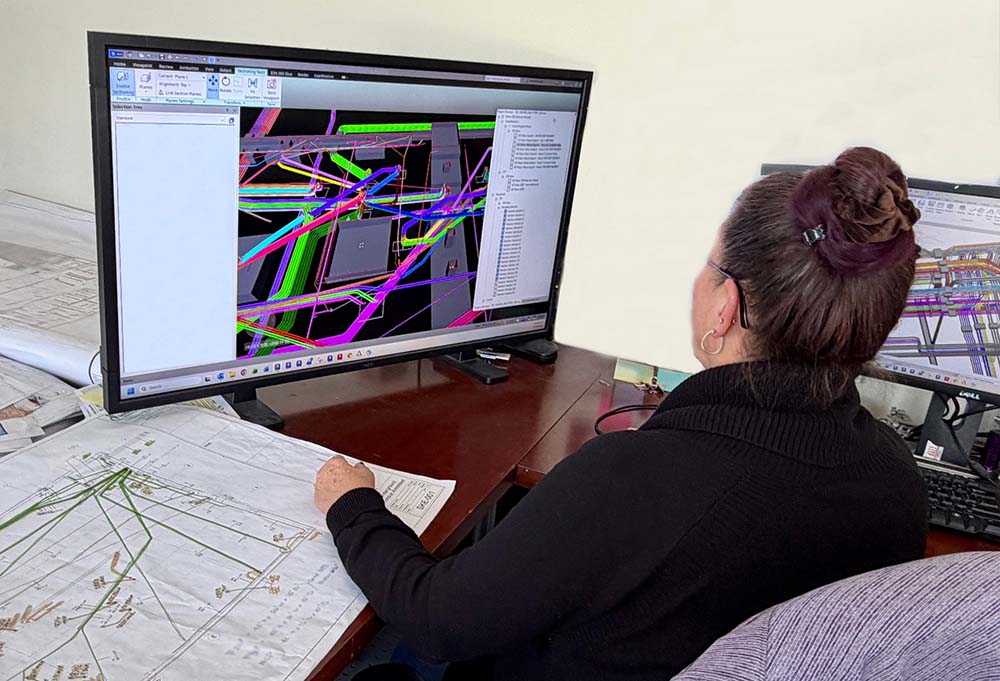
The evolution of Mechanical, Electrical, and Plumbing (MEP) systems is currently defined by a shift from static infrastructure to active, intelligent networks. In the past, MEP systems were viewed as the hidden guts of a building, designed to meet the baseline needs of power, water, and climate control. Today, as we push for higher-performing and more resilient structures, these systems have become the primary drivers of a building’s longevity and operational efficiency.
A significant part of this evolution is the transition to digital precision through Virtual Design and Construction and advanced layout systems. Five years ago, laying out a complex ceiling or an overhead utility run meant pulling dimensions from a 2D paper drawing and using a tape measure on a dusty congested floor to place individual hanging points. With the increased usage of prefabrication for electrical construction, singular pipes are no longer being built in isolation but are now being built as entire assemblies on frames. Modern digital layout systems allow for the pinpointing of precise hanging points for non-symmetrical lighting fixtures or complex switchboard clearances in a matter of hours. This level of confidence guarantees that complex electrical rooms or specialized network systems fit perfectly within the model’s clearances before a single piece of gear arrives on site.
Resilience is also being built into the very way MEP systems are delivered. High-performance buildings demand a level of precision that is difficult to achieve solely through traditional on-site installation. By moving the majority of MEP assembly to a controlled, UL-certified environment, we eliminate the variables of site congestion and harsh New England weather. There is a profound safety and quality advantage to building a lighting control assembly on a climate-controlled bench rather than at the top of an eight-foot ladder in a 33-degree unfinished building. This approach allows for a lock-and-load installation process where assemblies arrive on-site and are ready for immediate integration, greatly reducing the time spent in high-traffic or hazardous areas of the job site.
What should building owners be paying closer attention to when it comes to their MEP systems? The answer is the value of the digital handover. It is no longer enough for an owner to receive a set of paper as-builts at the end of a project. To maintain a high-performing building, owners should be provided with integrated data that serves as a digital twin for the life of the facility. If a leak occurs in a lobby ceiling years later, a digital twin allows a facilities manager to pinpoint the exact location of a coupling or a deteriorated connection without having to tear down an entire lateral or remove ceiling tiles blindly.
Furthermore, owners must look toward future-proofing through modularity. As technology accelerates, particularly with EV charging and the need for greater power consuming equipment in data centers, buildings must be prepared for expansion on day one. A resilient building is one designed with the infrastructure sitting ready – like future breakers preinstalled and run out to safe junction box connection points – so that a 2030 technology upgrade does not require a massive shutdown or a disruption of operations. Choosing an electrical partner who understands this intersection of construction and intelligence is one of the most critical steps a building owner can take toward future-proofing their investment.
By Edward Gould, Operations Center production area manager at Interstate Electrical Services Corporation.