

Ask The Electrician: How Can Developers Solve the Power Puzzle of High-Density Data Centers?
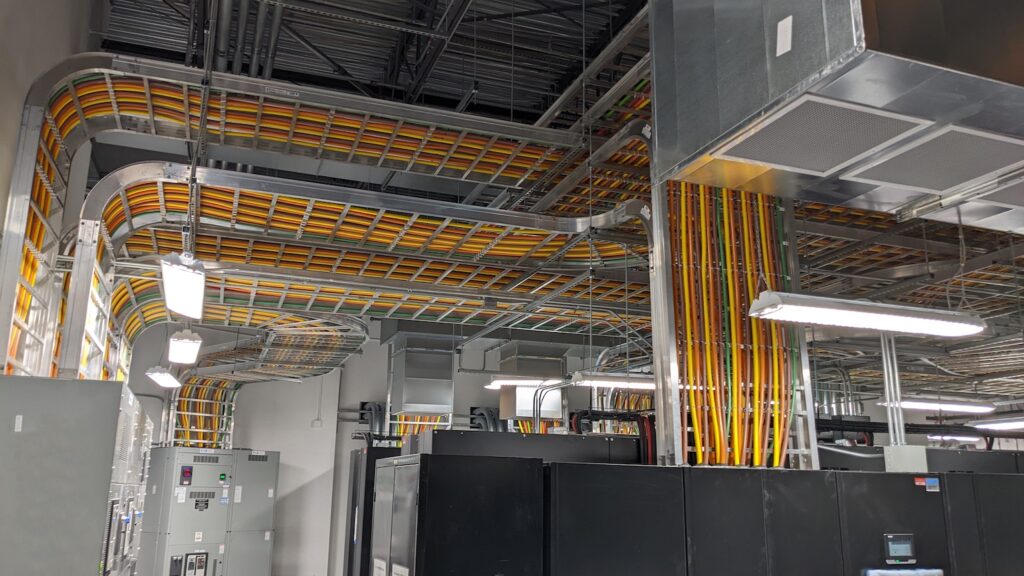
While hyperscale developers are building massive, multi-acre campuses in the Midwest, the New England market is focused on a different strategy. Here, the challenge isn’t finding hundreds of acres of land, it’s the surgical task of installing 2026-level AI technology into existing, space-constrained shells. For local developers, the goal is something called Precision Power. Precision Power maximizes power density within a fixed footprint while navigating a constrained regional grid. In this Ask The Electrician column, we will explore how to transform legacy industrial or commercial properties into high-density digital hubs.
Reclaiming Stranded Power
In the Northeast, project viability is defined by capacity. The first step in the development lifecycle of a high-density data center is an electrical audit to identify stranded power, which are utility connections originally sized for heavy manufacturing or large-scale office use that are currently underutilized. Uncovering this hidden capacity and reclaiming the infrastructure during the due diligence phase often allows for a high-voltage upgrade without the multi-year timeline or cost of a total teardown and utility overhaul.
The Mechanical-Electrical Marriage
AI chips generate heat that traditional air cooling can no longer handle. The shift to liquid cooling (direct-to-chip or immersion) is the key to unlocking density in compact footprints. Beyond saving space, liquid cooling is incredibly efficient. It can reduce the energy used for cooling by up to 41% compared to traditional air-cooled methods.
Because liquid cooling significantly reduces the electrical draw of traditional HVAC fans, that saved power can be redirected back to the server racks. However, this requires a sophisticated central nervous system. Supervisory Control and Data Acquisition (SCADA) systems bridge the gap between electrical and mechanical infrastructure. These systems monitor and balance power loads in real-time while automatically controlling the start/stop sequences of cooling equipment, ensuring both systems work in harmony.
Bypassing the Grid Bottleneck
With the regional grid under constant stress, waiting for a utility upgrade can stall a project for months or even years. To gain a speed-to-market edge, developers are turning to behind-the-meter solutions like Battery Energy Storage Systems (BESS). By integrating BESS, a facility can “peak shave,” which means storing power during low-demand hours to use during peak times. This bypasses grid delays and adds a critical layer of protection against local power fluctuations.
The Bottom Line
The boutique data center is the future of the New England tech corridor. By treating power as a spatial puzzle rather than a raw commodity, owners can transform aging assets into high-performing digital hubs. The key is early engagement. Make sure you include your electrical contractor during due diligence to ensure your Precision Power plan is viable before the project begins.
By Edward Gould, Operations Center Production Area Manager at Interstate Electrical Services Corporation.