

Ask the Electrician: How Does Thermal Imaging Protect Campus Power Systems?
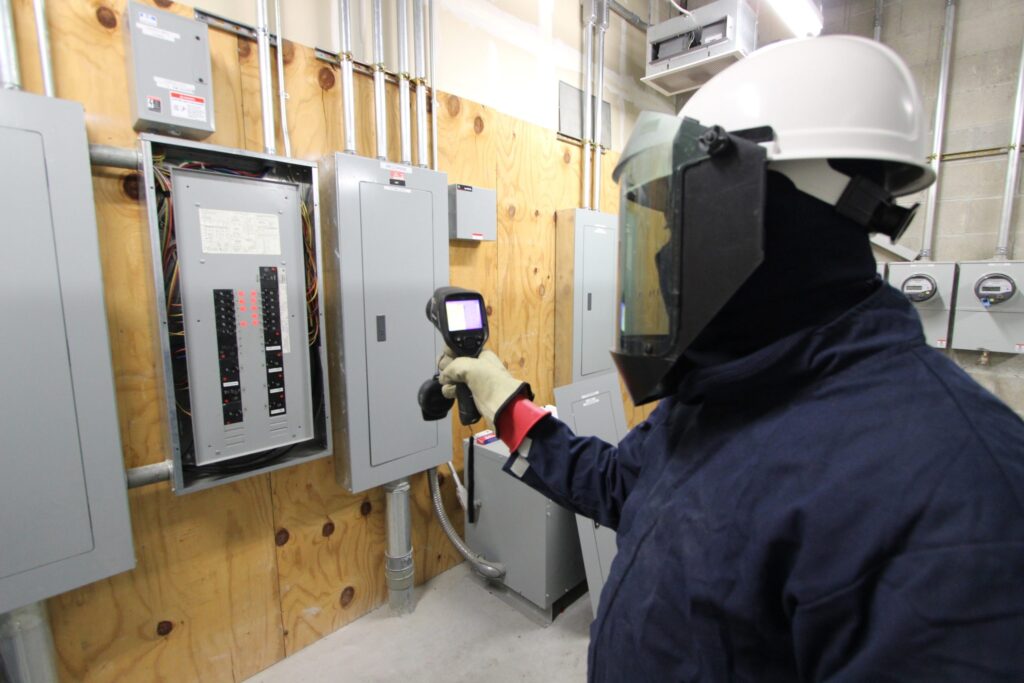
For facility managers overseeing colleges, universities, and K-12 schools, maintaining uninterrupted power is critical. An unexpected electrical failure in a residence hall, research lab, or classroom building can disrupt learning, compromise safety, and cause costly emergency repairs.
Infrared thermography, commonly known as thermal imaging, offers school facility teams a non-invasive way to detect electrical issues before they lead to unplanned outages.
Detecting Hidden Hazards Under Load
Thermal imaging cameras detect infrared radiation, converting temperature variations into visual heat maps. Because excessive heat is often the first indicator of electrical stress, certified thermographers use these cameras as part of a routine preventive maintenance program across campus facilities.
During a scan, electricians evaluate circuit breakers, distribution panels, and transformers to identify loose wire connections, overloaded circuits, or internal contact degradation. Detecting these hotspots early allows maintenance teams to address minor mechanical or electrical faults before they cause equipment failure or fire hazards.
Minimizing Disruption to Campus Operations
Traditional electrical inspections often require shutting down power to safely open equipment and test connections. Shutting down distribution panels in an active academic building or dining facility just isn’t practical during the school year.
Thermal imaging inspections are performed while equipment operates under normal load. Power remains on during testing, preventing disruptions to classes, campus housing, or administrative functions. The technology also provides real-time visual documentation, giving facility managers clear data to prioritize summer improvement projects or targeted off-hour repairs.
Extending Equipment Lifespan
Recent technology upgrades, including higher-resolution sensors and digital reporting tools, allow electricians to diagnose system health quickly and accurately. Following any corrective maintenance, technicians rescan the equipment to confirm the issue is resolved and verify balanced load distribution.
Integrating routine thermal inspections into annual campus maintenance helps school facility teams extend the operating life of major electrical infrastructure, control repair costs, and maintain safe, reliable power across campus.